B2B SaaS / Sales
Mobile app
A mobile sales readiness app that transforms scattered CRM data into one focused call briefing, helping revenue teams walk into every conversation prepared.

Jefferson Nnaji
·
Overview
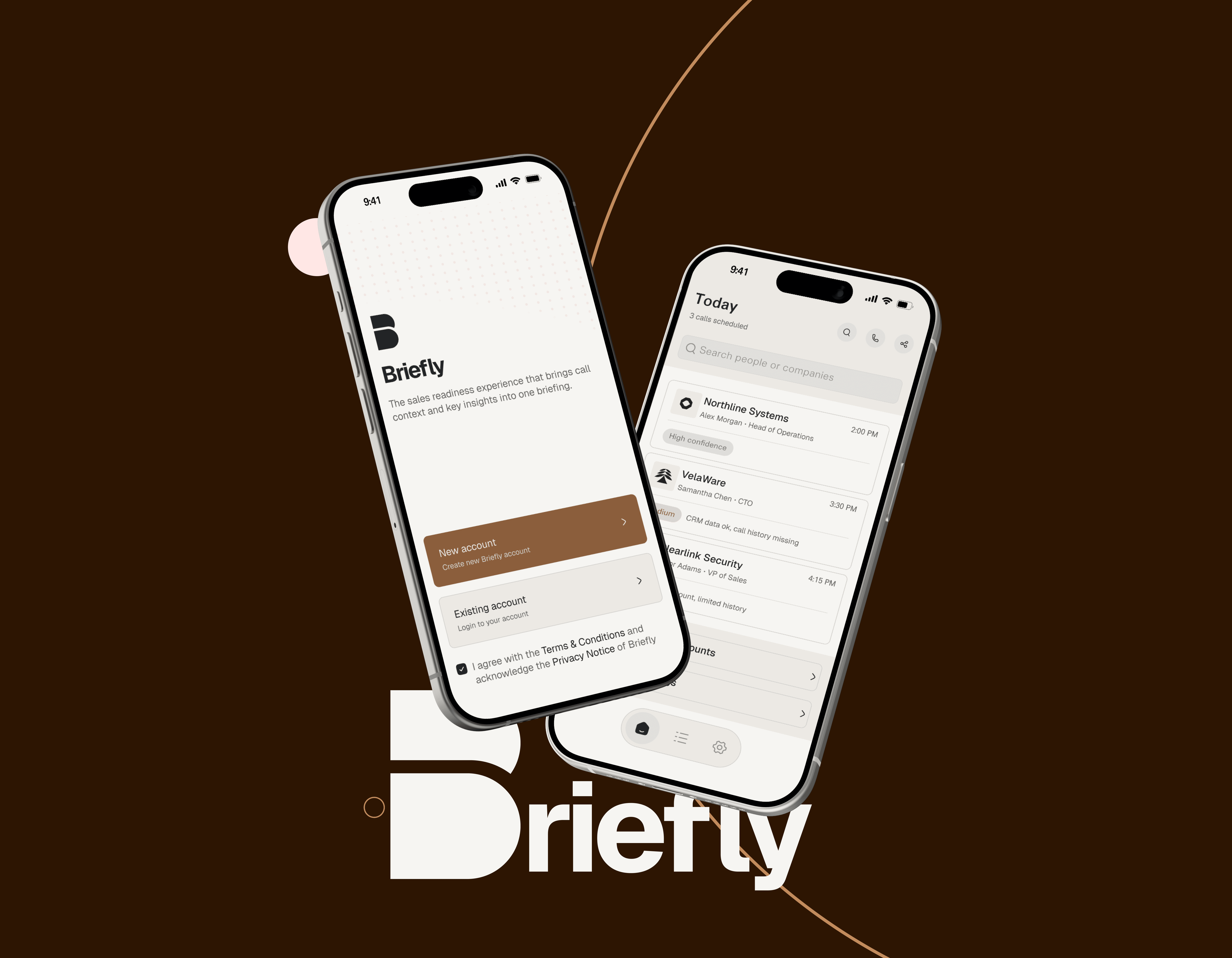
Briefly is a mobile sales readiness app built to help revenue teams walk into every call prepared. Not with more data, but with the right context at the right moment. It transforms scattered CRM records, calendar events, and interaction history into one focused briefing before every conversation.
The Problem
Sales reps don't fail because they lack skill. They fail because they lack structured context at the moment it matters most.
Before every call, the average sales rep opens the CRM, scans email threads, searches through notes, checks stakeholder updates, and tries to recall previous objections from memory. All of this happens in a 10 to 20 minute window before a live conversation, often on a mobile device, sometimes while multitasking.
CRMs are built for record-keeping, not clarity. AI assistants generate insights without explaining them. Sales intelligence tools are powerful but disconnected from real-time preparation. The result is that conversations become generic, trust erodes, follow-ups become inconsistent, and confidence drops.
The problem was not a lack of information. It was a lack of structure around the moment that mattered most: the call.
The Solution
Briefly restructures preparation around one core moment. Instead of exposing raw CRM fields and leaving reps to piece things together, the system generates a concise call summary, surfaces relevant account context, highlights key stakeholders, suggests talking points with explanations, and supports quick note capture and follow-up creation immediately after the call.
The guiding principle throughout was simple: AI assists preparation, but never replaces human control.
User Research
Understanding who uses Briefly, and under what pressure, was critical. Sales preparation is not a casual activity. It happens in short, high-stakes windows before live conversations.
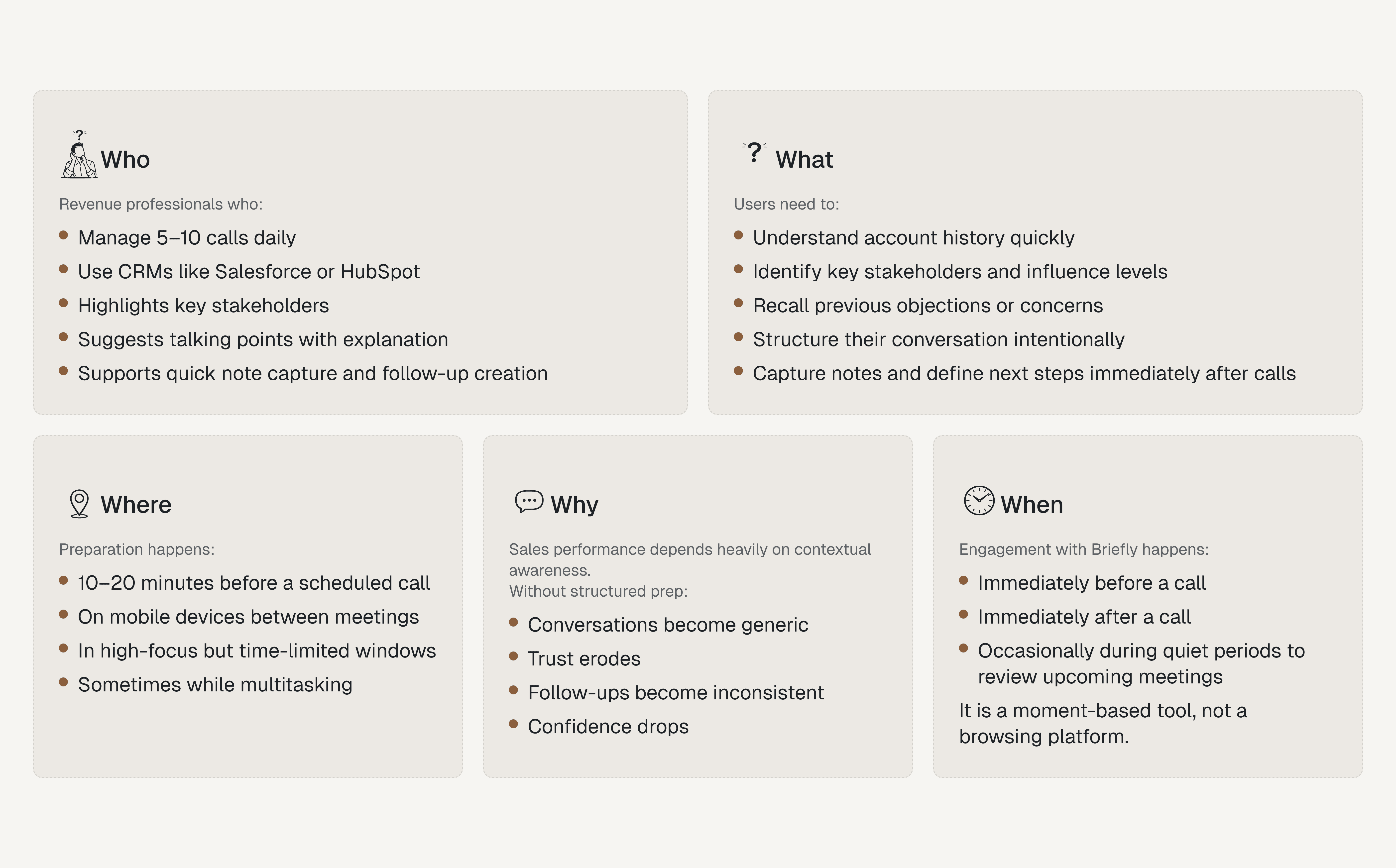
Who: Revenue professionals managing 5 to 10 calls daily, using CRMs like Salesforce or HubSpot, specifically Account Executives, Sales Development Representatives, and Customer Success Managers. These are professionals who value speed, clarity, and context before conversations but do not want another complicated tool.
What they need: To understand account history quickly, identify key stakeholders and influence levels, recall previous objections, structure their conversation intentionally, and capture notes immediately after calls.
Where preparation happens: 10 to 20 minutes before a scheduled call, on mobile devices between meetings, in high-focus but time-limited windows, sometimes while multitasking.
When engagement happens: Immediately before a call, immediately after a call, and occasionally during quiet periods to review upcoming meetings. Briefly is a moment-based tool, not a browsing platform.
Why it matters: Without structured preparation, conversations become generic, trust erodes, follow-ups become inconsistent, and confidence drops. Sales performance depends heavily on contextual awareness, and that awareness has nowhere to live before Briefly.
Design Goals
The redesign was built around three core objectives.
Clarity. Reduce preparation time by structuring information around relevance, not raw data. The question was never "what data exists?" but "what does this rep need to know in the next three minutes?"
Trust. Make AI insights transparent and explainable rather than opaque. Every suggested talking point includes a "Why this?" label so reps understand the reasoning behind each recommendation. AI that explains itself gets used. AI that doesn't gets ignored.
Momentum. Extend preparation beyond the call through seamless note capture and follow-up actions. The experience doesn't end when the call starts. It continues until the next step is defined.
Key Design Decisions
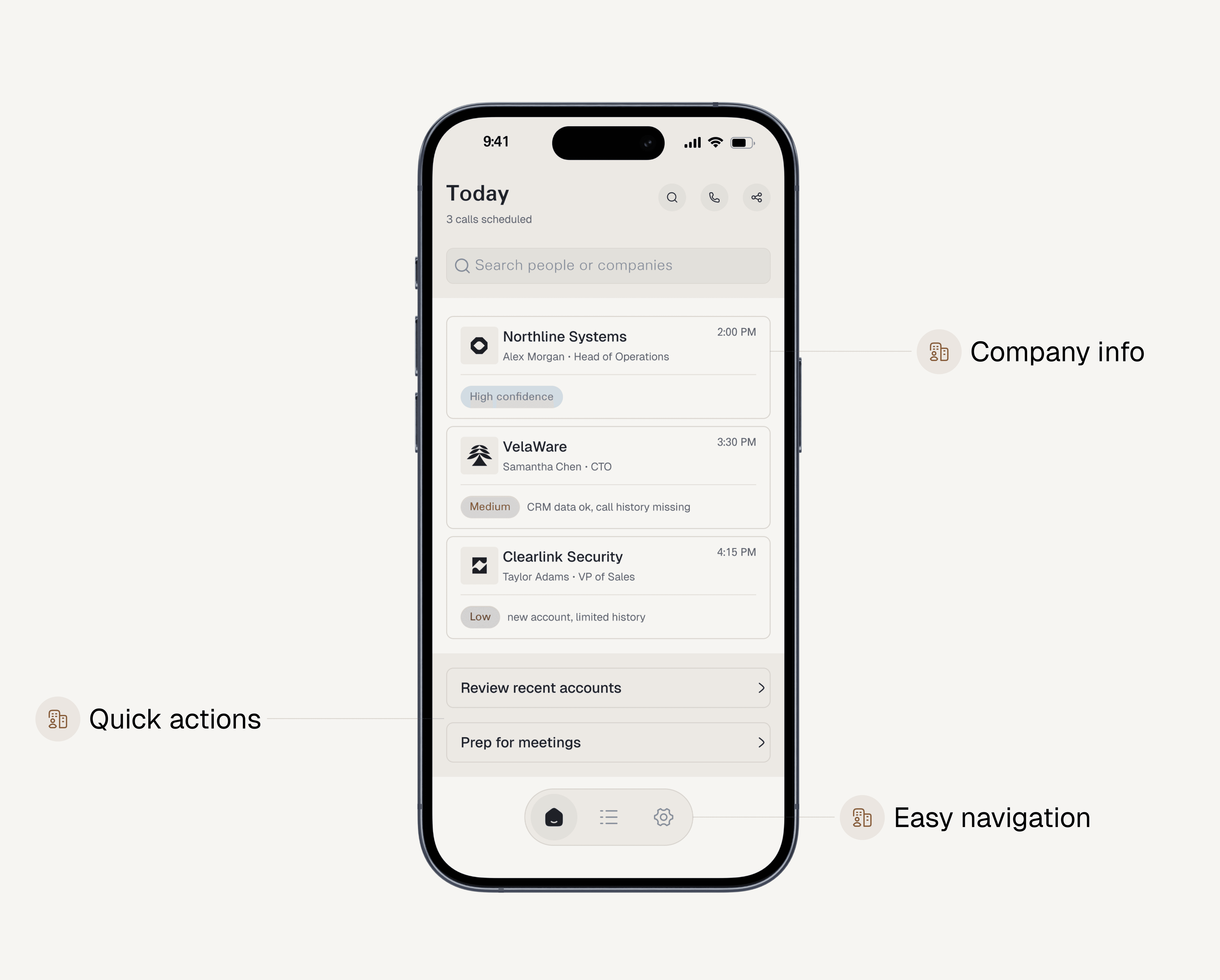
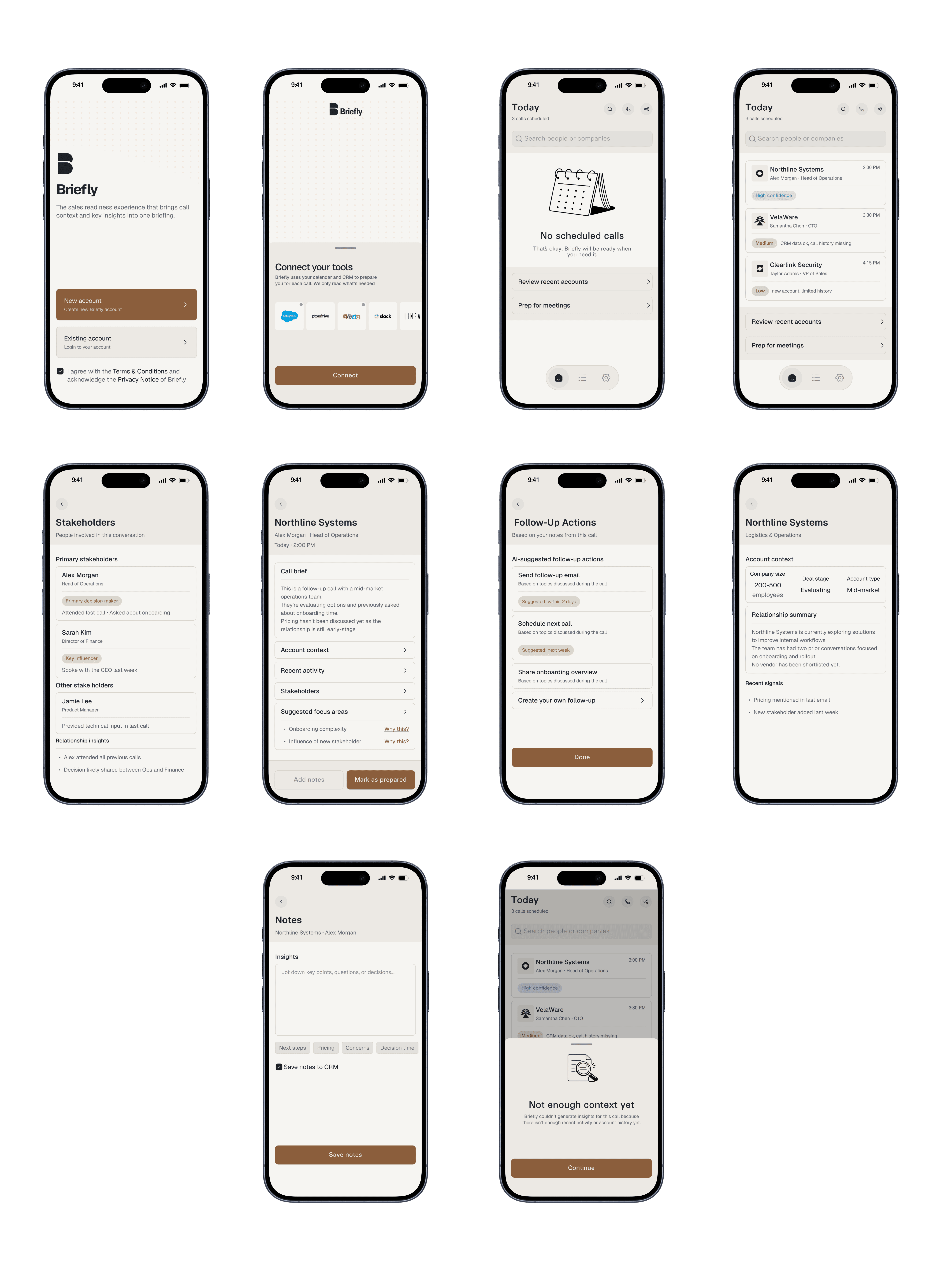
The Home Screen The Today screen was intentionally designed without dashboards, pipeline metrics, or performance summaries. Instead of overwhelming users with data, it anchors the experience around time. Each call card shows only the company name, contact, scheduled time, and a readiness indicator. This keeps attention on the next conversation rather than on administrative noise.
The Call Preparation Overview This is the center of the product. The hierarchy follows a strict order that prioritizes relevance and speed. The AI-generated call brief is always visible at the top, ensuring the most critical context is immediately accessible. Supporting information including account context, recent activity, stakeholders, and suggested focus areas lives in expandable sections, allowing users to move from quick scanning to deeper exploration without cognitive overload.
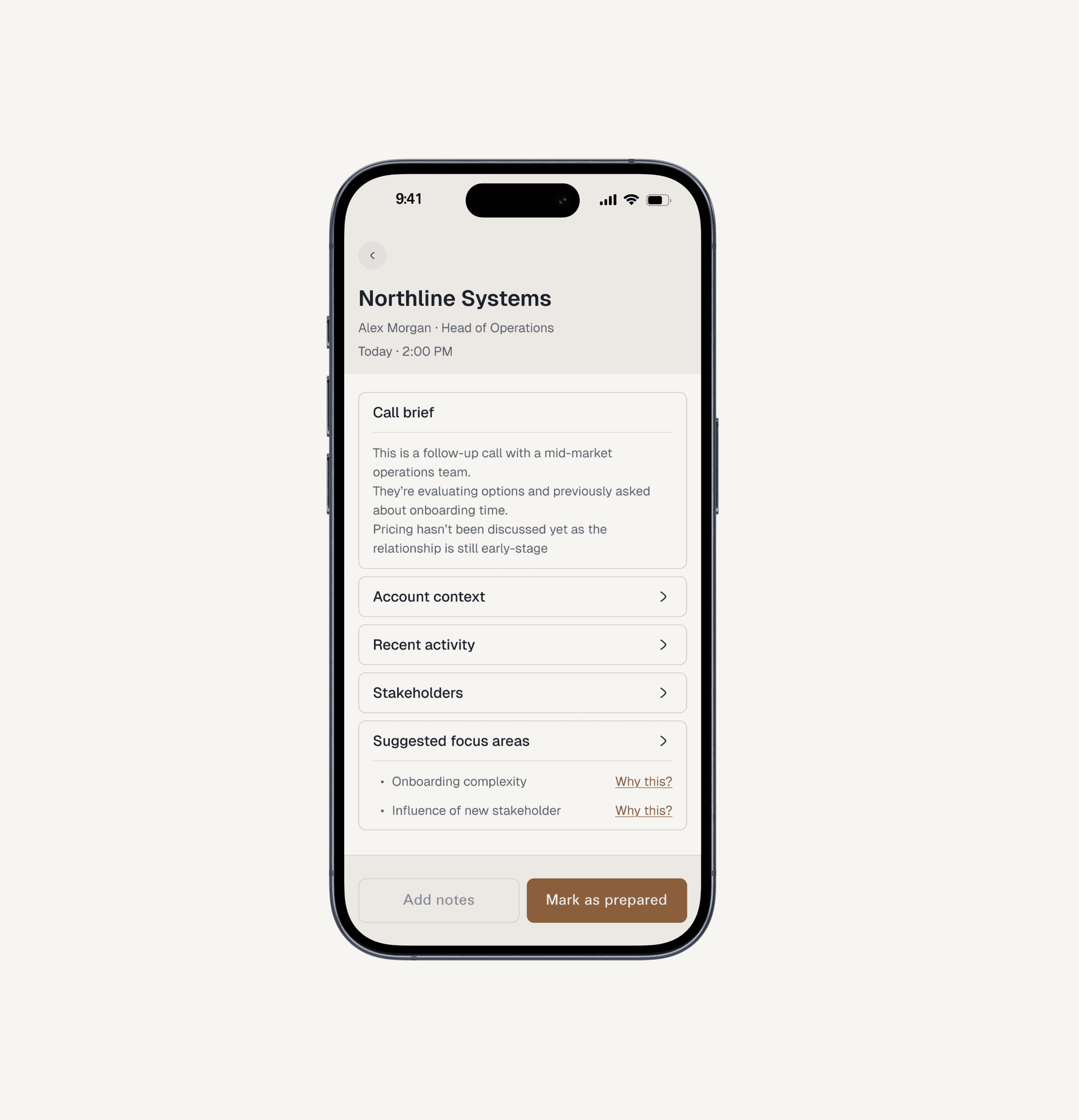
Explainable AI Every AI suggestion includes a "Why this?" link. This was one of the most deliberate decisions in the project. Trust in AI tools is fragile, especially in high-stakes sales environments where a wrong talking point can cost a deal. By making the reasoning visible, Briefly gives reps the confidence to use the suggestions rather than second-guess them.
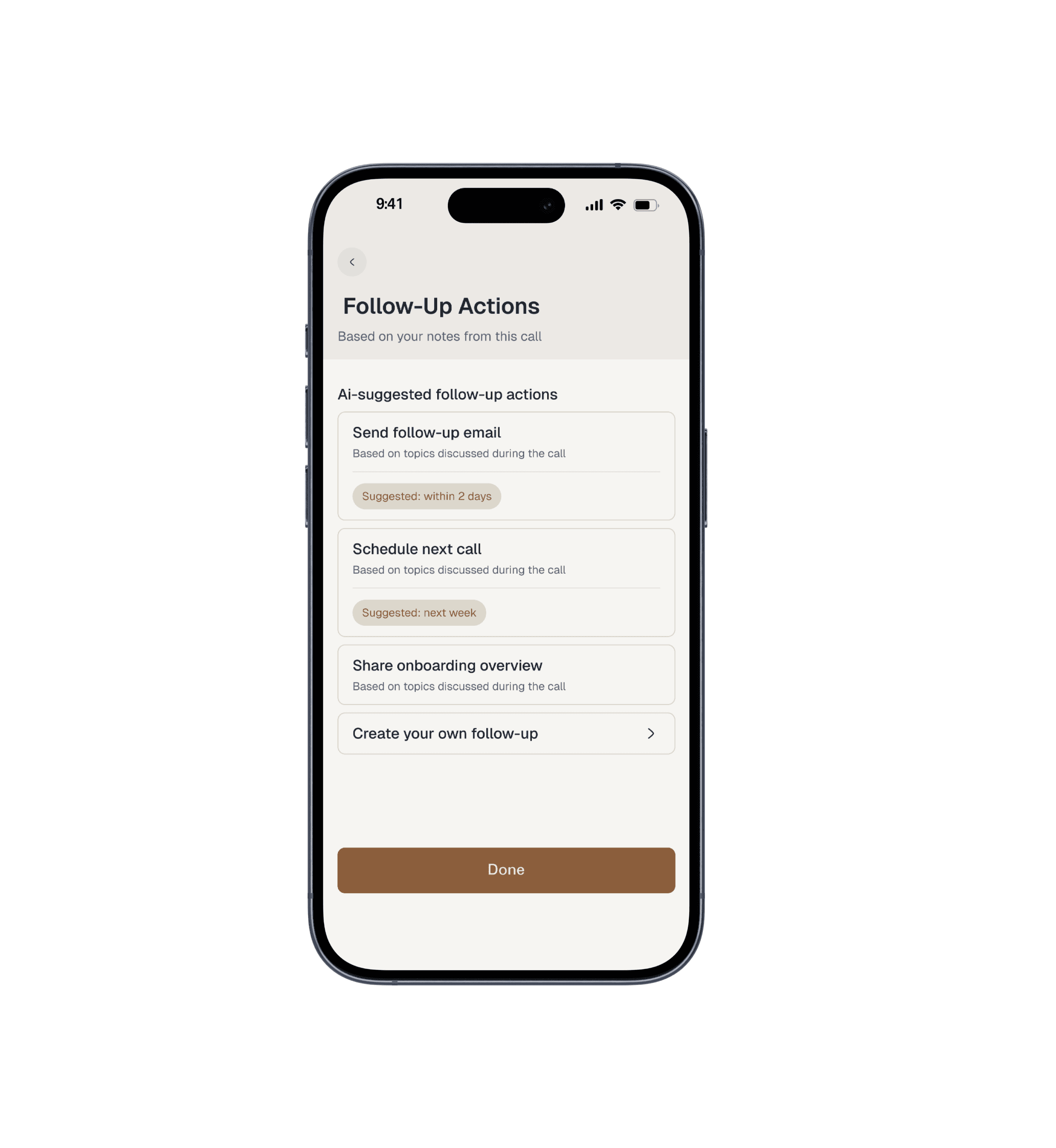
Follow-Up Actions Immediately after a call, Briefly surfaces AI-suggested follow-up actions based on notes taken during the conversation. Send a follow-up email, schedule the next call, share an onboarding overview. Each suggestion includes a timing recommendation. Reps can accept, modify, or create their own. The goal was to close the loop while context is still fresh.
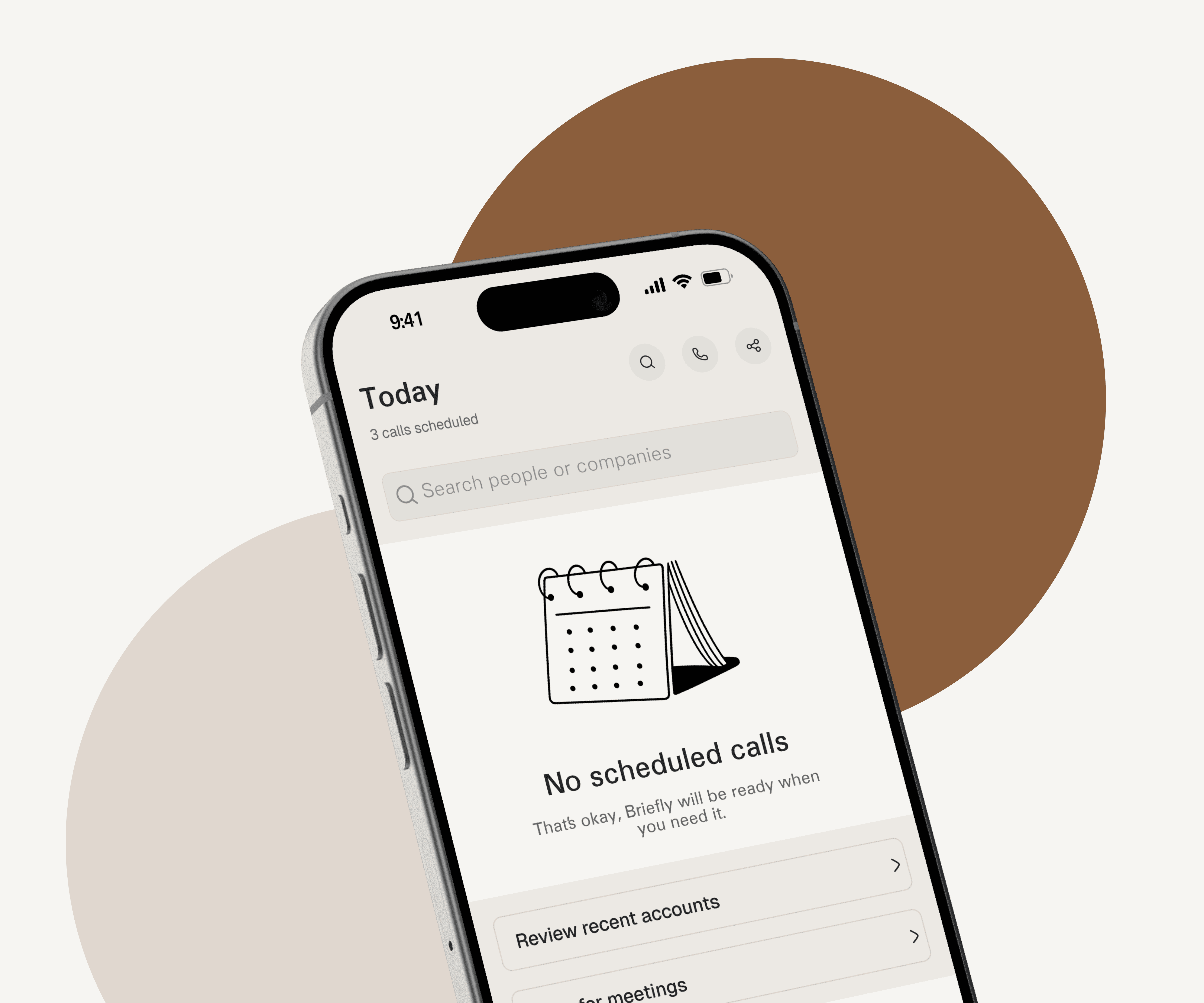
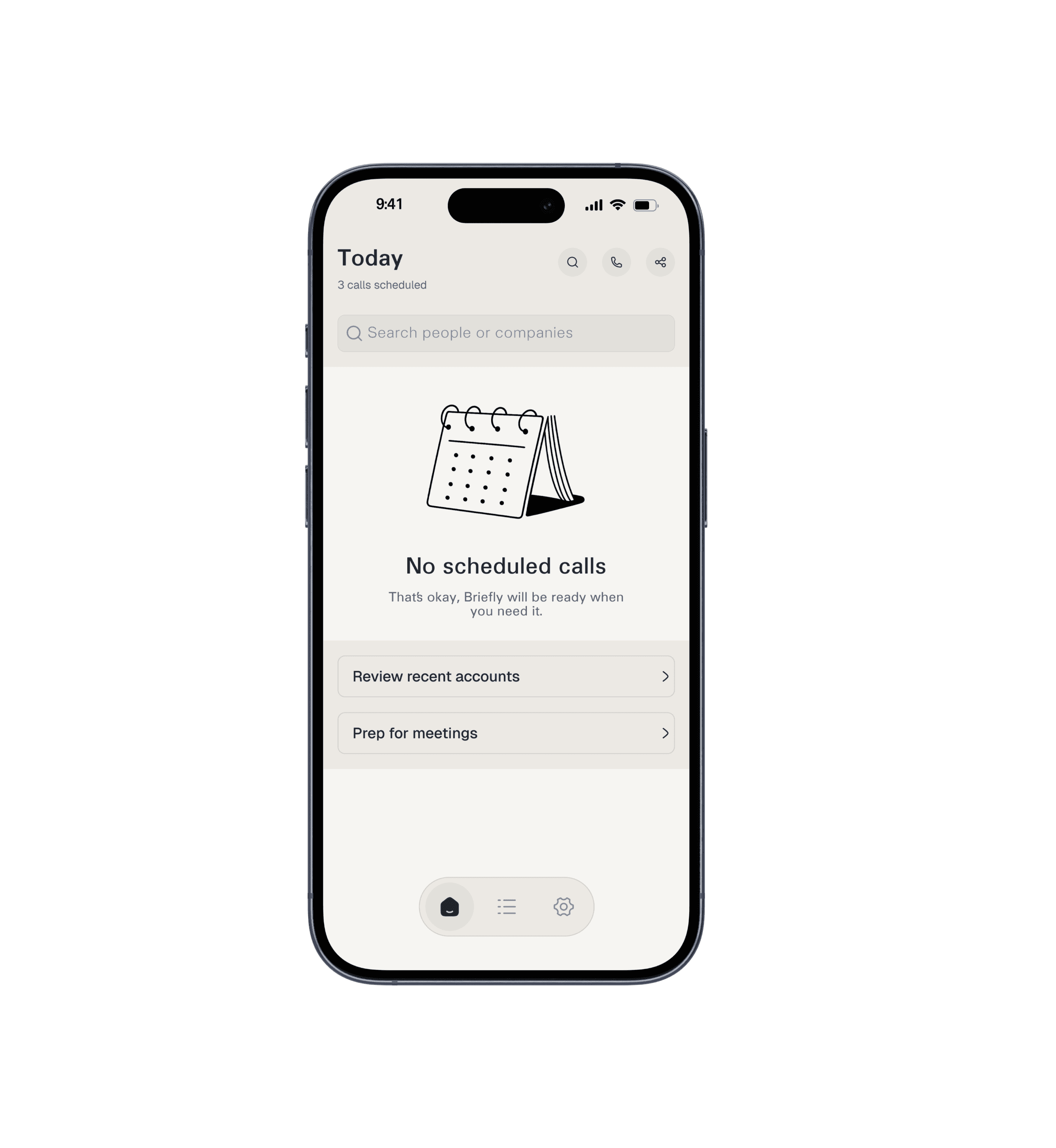
Empty States Even the empty state was designed with intention. When there are no scheduled calls, the screen reads "No scheduled calls. That's okay, Briefly will be ready when you need it." This small detail reinforces that Briefly is a calm, reliable presence rather than a demanding productivity tool.
Projected Impact
If implemented, this experience would aim to reduce average preparation time from roughly 20 minutes to 2 to 3 minutes, increase call confidence through structured summaries, improve follow-up consistency, and increase AI adoption through transparency.
By reorganizing context rather than adding more data, the experience shifts preparation from reactive to intentional.
What This Project Reinforced
Three principles came out of this work stronger than when I started.
AI should reduce cognitive load, not increase it. The moment an AI feature requires a user to think harder than they would without it, it has failed its purpose.
Trust is built through explanation, not automation. Showing your work is not a weakness in AI design. It is the entire point.
Sales teams do not need more dashboards. They need clarity before conversations.
What I Would Do Next
Test preparation time reduction quantitatively with real sales reps under actual time pressure. Conduct usability testing in the moments the app is designed for, not in a controlled session. Refine insight prioritization logic based on which talking points reps actually use. Explore personalization based on individual rep behavior patterns over time.
The foundation is strong. Validation would sharpen everything.
More Projects
Other work you might find interesting